
Reviewed · WALKING TOURS IN ANTIGUA
Antigua Walking Tour Morning and Afternoon
Antigua is the kind of place where the streets feel like a map from the 1500s, even when you are standing right in the middle of it. This morning or afternoon walking tour gives you the big picture fast, with stops that explain why the city was laid out the way it was and how the earthquakes shaped what you see today. I especially like the solid city-orientation vibe, and the chance to hear stories from guides like Armando and Moises, including Moises, who grew up in Antigua.
Two more things I like: you get a nice mix of churches, convents, and colonial art without spending the whole day in one museum, and the group stays small, capped at 15 people. The main drawback to keep in mind is that admissions are not included, and some stops are short, so you may want a little flexibility if you want to linger.
Key highlights before you go
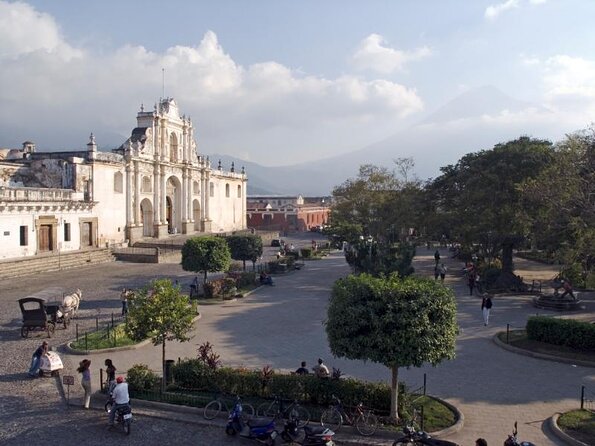
- Start at Plaza Mayor (Plaza Central Park) and understand the 1541 square plan, not just the view.
- Catedral de San José connects you to Antigua’s repeated rebuilding after major earthquakes.
- San Francisco el Grande leads you to the tomb of Pedro de San José de Betancur.
- Concepción Convent ruins bring in Sister Juana de Maldonado and the Pensativo River setting.
- Casa Santo Domingo shows how baroque architecture survives inside a working hotel and museum complex.
- Mercado de Artesanías finish gives you time to shop on your own right near the center.
Antigua Plaza Mayor: why the 1541 street grid still matters
You start at Café Condesa La Casa del Conde, then walk into Antigua’s central stage, the Plaza Central Park, also known as Plaza Mayor. What makes this stop useful is that you are not just looking at pretty colonial buildings. You’re learning how the city’s plan was engineered in 1541, using a square and compass approach to create a reticulated urban organization.
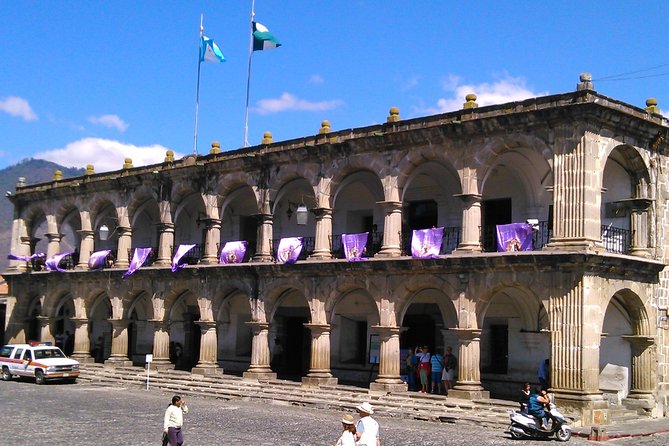
Here’s the fun part for your eyes. The plaza is described with specific measurements, 112 meters north to south and 115 meters east to west, and the corners line up with major features. You can orient yourself right away: the portal of Chains and the Palace of the Noble City Hall to the north, the Episcopal Palace and the Cathedral of Santiago to the east, the Royal Palace to the south, and the Merchants Portal, also called Panaderas, to the west.
In the center, don’t miss the source of the Sirens, built in 1739 by Diego de Porres. It’s the kind of detail that turns a photo into a memory, because once you know what it is, you start noticing similar elements all over town. Also look down at the living layer of the plaza, with five Esquisúchil trees planted around 1994. That mix of old design and newer planting is a good reminder that Antigua is not frozen in time.
More Walking Tours in Antigua
- Antigua Cultural Walking Tour
★ 4.5 · 725 reviews - Antigua Guatemala: City Highlights Guided Walking Tour
★ 5.0 · 462 reviews - Antigua Classic Cultural Walking City Tour – the best
★ 4.5 · 227 reviews
Catedral de San José: seeing rebuilding after Santa Marta earthquakes
From the plaza, you head to Catedral de San Jose, located in a section of the former Cathedral of Santiago de los Caballeros. The big idea here is that Antigua’s churches did not just get older. They got repeatedly damaged and rebuilt, especially after the Earthquakes of Santa Marta.
What to appreciate on this stop is the timeline. The first cathedral building started in 1545, using debris brought from the destroyed settlement in the Almolonga valley, which had been a second attempt to found a town in the region. Construction was interrupted by frequent earthquakes, and later the temple was demolished on April 7, 1669. Then a second sanctuary was inaugurated in 1680, guided by Juan Pascual and José de Porres, with evidence that Spanish engineer and imager Martín de Andújar Cantos worked on reconstruction.
Why this matters for you as a visitor: once you understand that Antigua’s architecture is partly a record of survival, you stop treating every facade as a single moment in time. You start reading the layers. Even if your stop is about 20 minutes, you can get a lot out of it by slowing down, looking up at the church context, and letting the guide connect it back to what you learned at Plaza Mayor.
Practical tip: admissions are not included for this stop, so if you decide to go inside more deeply than the quick viewing, budget for on-site entry costs.
Museo de Arte Colonial and the USAC connection in Antigua
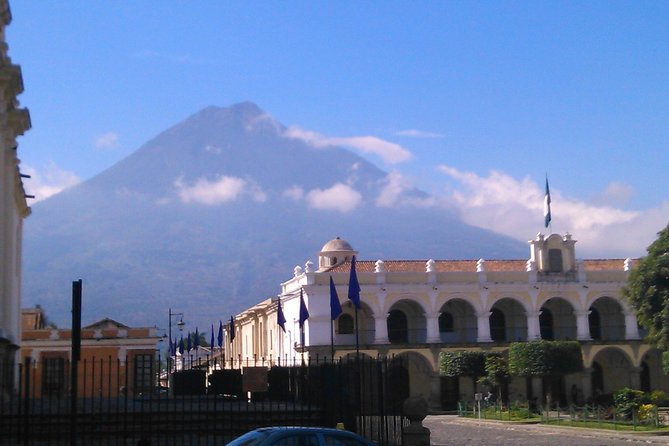
Next is a shorter stop at Museo de Arte Colonial. The time here is listed as about 5 minutes, so treat it like a “bookmark,” not a full museum visit. This stop comes with a helpful context jump about the University of San Carlos de Guatemala, known as USAC, which is described as the largest and oldest university in Guatemala and the only national one in the country.
The tour ties this university into the colonial story. It was established during the Spanish colony in the Captaincy General of Guatemala, and it remained the only university in Guatemala until 1954. It is also noted as the fourth university founded in America. Even if you do not go deep into galleries, that framing gives you a better sense of why Antigua feels like a living classroom for Guatemala’s colonial past.
Because this stop is brief, your best move is to use it to get oriented. If something catches your eye, note it and consider returning later on your own when you have more time and can pay admissions if needed.
San Francisco El Grande and the tomb you should look for
When you reach Iglesia de San Francisco El Grande, you get another earthquake-focused chapter, but with a clear reason to care. The sanctuary was first built in the mid-1500s and suffered deterioration in 1565 after a strong earthquake. The current church was built in 1702 by Diego de Porres, and it was later destroyed by earthquakes in 1717, 1751, and 1773.
The repair story continues into the 1900s. After abandonment, the church was damaged again by earthquakes in 1874 and 1917. Then it was rebuilt during the second half of the twentieth century, after regular orders were allowed to have ownership again, and the Franciscans returned the complex in 1967.
What makes the stop memorable is what the church houses: the tomb of Pedro de San José de Betancur, a missionary in Guatemala and a saint of Spanish origin. If you want one “anchor fact” to remember from this tour, make it this. It turns the visit from sightseeing into a pilgrimage-style detail, even if you are just passing through for a short time.
Admission is not included here, so if the inside visit is a priority, plan for any entrance fees at the site.
A short list of other Antigua options
- Antigua Walking Tour
★ 4.5 · 96 reviews - Antigua Guatemala: Street Food Walking Tour with Tastings
★ 4.8 · 87 reviews - La Antigua Horror Stories Night Walking Tour
★ 4.9 · 74 reviews - Walking Tour of the Wonders of La Antigua Guatemala
★ 5.0 · 65 reviews
Concepción Convent ruins by the Pensativo River
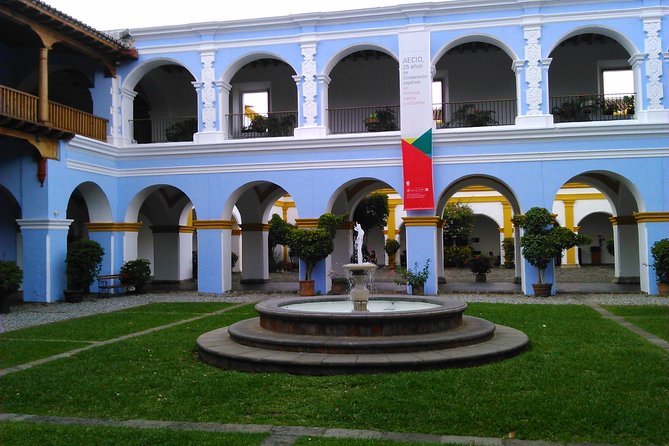
One of the most atmospheric parts of the walk is the Concepción Convent ruins. You’re looking at a ruined complex and one of Antigua’s notable attractions, and it sits on the banks of the Pensativo River. That setting matters because ruins feel different when you can see how the land and water shaped daily life.
This stop also introduces an iconic personality: Sister Juana de Maldonado. She is described as a controversial and interesting historical figure in Antigua, and she is said to have professed as an urban nun in this convent during the first half of the seventeenth century. Even though you might not get a long lecture here, the detail changes how you view the crumbling walls. You start imagining voices, daily routines, and the urban life that once surrounded the convent.
If you like photos, this is where you’ll want to take a few minutes. The ruins and the river context give you layered shots, and the stop length is not listed as long, so you will likely need to balance time if you also want to keep moving with the group.
Casa Santo Domingo: baroque that still works as a hotel and museum
Next up is Casa Santo Domingo Museums, tied to the Hotel Casa Santo Domingo, described as a 5-star hotel and museum in Antigua. This stop is interesting because it shows how colonial space can be reused without turning into a theme park.
The complex is the former Convent of Santo Domingo, once described as one of the largest convents in America. The tour emphasizes the preservation of baroque architecture and colonial treasures, with baroque details that you can still appreciate as part of the building’s structure and layout.
You also get a “when did it become this?” fact: the hotel opened in June 1989. That matters for how you interpret the site, because it tells you these old stones were not just left behind. They were restored enough to function as a modern hospitality and cultural space.
Casa Santo Domingo is said to be about 10 minutes walking distance from Central Park in Antigua, and it is listed as 45 kilometers from Guatemala City, about 50 minutes driving. You do not need the distance for sightseeing, but it helps if you’re also planning other day trips and want your geography to make sense.
As with other sites, admission is not included. If you want to go inside and not just view exteriors, decide in advance how much you care about museums versus churches, and budget for that choice.
Mercado de Artesanías and the Igreja del Carmen facade
You finish at the Mercado de Artesanías, where you can shop on your own. The end point is listed as about two blocks away from Central Plaza, which is convenient because you can easily return to other sights afterward without feeling “stuck” at the market.
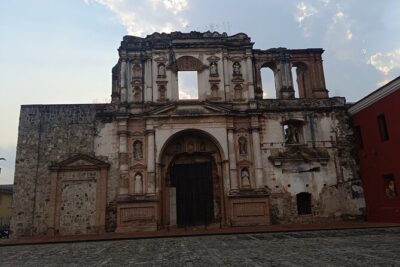
This stop is paired with a note about a church known as Iglesia del Carmen. It explains that Iglesia de Nuestra Señora del Carmen was destroyed by the Santa Marta earthquakes in 1773, and even though the temple suffered almost total destruction, the facade remained in good state. It is admired as an example of what’s called barroco sísmico guatemalteco, baroque shaped by earthquakes.
The name “Iglesia del Carmen” also carries a practical historical reason. After destruction, Carmelites moved to Guatemala City, and the facade kept the name that was familiar locally.
At the market, think like a smart shopper. Go in knowing you’re browsing. If you find something you really want, compare with one or two nearby stalls before committing, and remember you’re paying for craft plus the story and time behind the work.
Admission for this final area is listed as free, which is a nice bonus at the end of a paid tour.
Price, group size, and timing for a 3.5 hour city reset
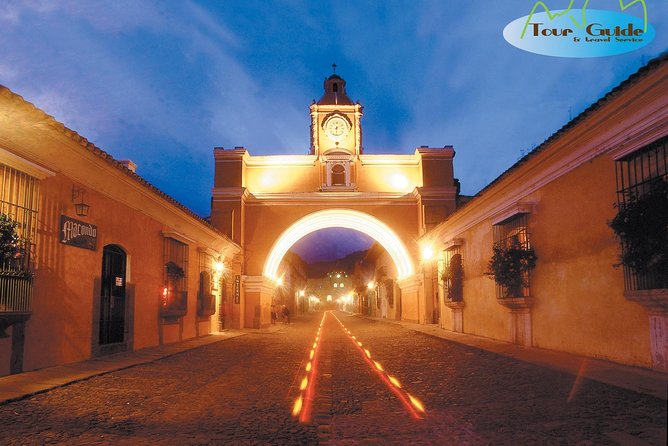
The price is $27.00 per person, for about 3 hours 30 minutes. That’s good value if your goal is to get oriented and learn how to read Antigua’s buildings. You’re not just collecting photos. You’re getting guided connections between plaza design, church rebuilding, and convent life.
Your guide is included, and the group is limited to a maximum of 15 people. That small cap is more than a comfort detail. It generally means you can ask questions and keep up without the walk becoming a slow moving line.
Because it runs in the morning and afternoon, pick based on your own pace. In general, mornings can feel cooler and better for walking, while afternoons can give softer light for photos around the plaza and churches. You don’t have to obsess over timing, but this tour does require decent weather. The experience is described as requiring good weather, and if it’s canceled due to poor weather, you’re offered a different date or a full refund.
What to bring matters because bottled water and coffee or tea are not included. Bring water, wear comfortable shoes, and plan for sun if you’re there in the brighter hours. Shorts stops plus lots of looking up can make the time feel shorter than it is, which is why comfort helps.
Who this Antigua walking tour fits best
This tour works especially well if you:
- Want fast city orientation without a car
- Care about architecture, but not in a purely academic way
- Like walking past churches and hearing why the current look happened
It may be less ideal if you:
- Want long museum stays, because admissions are not included and some stops are brief
- Hate walking in uneven colonial streets, since the route is designed for foot travel
- Prefer a totally flexible route, because the stops are set in sequence and the time at each is limited
If you are in Antigua for a short stay, this is the kind of tour that can give you a map in your head, so later visits feel more meaningful.
Final decision: should you book this Antigua walk
I’d book it if you want a guided, readable overview of Antigua that ties the city together: plaza planning, church rebuilding, convent ruins, and baroque details you can actually spot. The repeated praise for guides like Armando and Moises is a good signal that the value is not just the route, it’s the way history is translated into something you can understand in real time.
If you are mainly chasing one specific museum or you already know Antigua’s history well, you might feel a little constrained by the short stops. But for most first-time and return visitors, this is a solid, practical way to get your bearings and enjoy the places without turning your day into logistics.
FAQ
How much does the Antigua walking tour cost?
The price is $27.00 per person.
How long is the tour?
It lasts about 3 hours 30 minutes.
What is included in the price?
A tour guide is included.
Are admission tickets included?
No. Admission tickets are listed as not included for the tour stops.
Where does the tour start and end?
It starts at Café Condesa La Casa del Conde on Avenida Norte 5a, Antigua Guatemala, and ends at Mercado de Artesanías on 3a Avenida Nte., Antigua Guatemala.
How large is the group?
The tour has a maximum of 15 travelers.
Is good weather required?
Yes, the experience requires good weather. If it is canceled due to poor weather, you are offered a different date or a full refund.
Are service animals allowed?
Yes, service animals are allowed.
More Morning in Antigua
- Pacaya Volcano Morning Tour from Antigua
★ 5.0 · 75 reviews - Antigua Guatemala: Morning Tour from Guatemala City
★ 4.5 · 63 reviews - Tikal SUNRISE, Archeological focus and Wildlife Spotting Tour (North and West)
★ 5.0 · 328 reviews - From Flores: Tikal Sunrise Archaeological Tour
★ 4.5 · 147 reviews
Just reviewed around Antigua
- The old UNESCO★ 5.0 · 3 reviews
- Walking Tour Antigua, an open Museum★ 5.0 · 4 reviews
- Volcan Pacaya on wheels ATV From Antigua or Guatemala city.★ 5.0 · 4 reviews
- Transportation from Antigua to Panajachel★ 4.5 · 4 reviews
- Village Tour in Antigua Guatemala★ 5.0 · 4 reviews
- Tour of towns around Antigua Guatemala and Hobitenango★ 4.0 · 3 reviews
- Tour to the foothills of the volcano on ATV★ 5.0 · 3 reviews
- Private Transfers in Guatemala★ 3.5 · 3 reviews
Walking Tours in Antigua, compared.
Antigua Guatemala: City Highlights Guided Walking Tour
Read our review →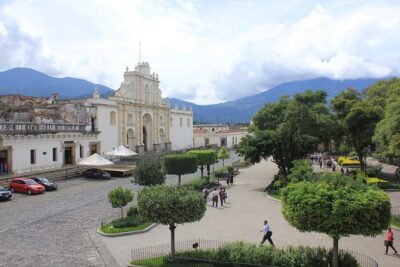
Antigua Classic Cultural Walking City Tour – the best
Read our review →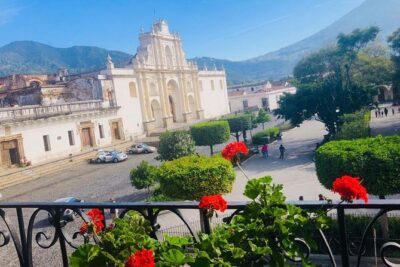
Antigua Guatemala: Street Food Walking Tour with Tastings
Read our review →
Walking Tour of the Wonders of La Antigua Guatemala
Read our review →
Browse the lists this tour appears in