
Reviewed · WALKING TOURS IN ANTIGUA
Antigua Cultural Walking Tour
Antigua is the kind of place where the streets explain the story, and this guide-led cultural walk helps you follow the plot without fighting maps. I like that you have a person steering the pace and the talking, so you can focus on the cobblestones, churches, and colonial details instead of navigation.
My favorite part is how the stops connect, from Catholic institutions to the earthquake-shaped ruins, with a final cultural stop at a jade workshop. One thing to weigh: this is history-focused, and you should expect a few longer pauses at major sites plus at least one retail stop, so it is not the tour for people who want constant wandering.
Key things to know before you go
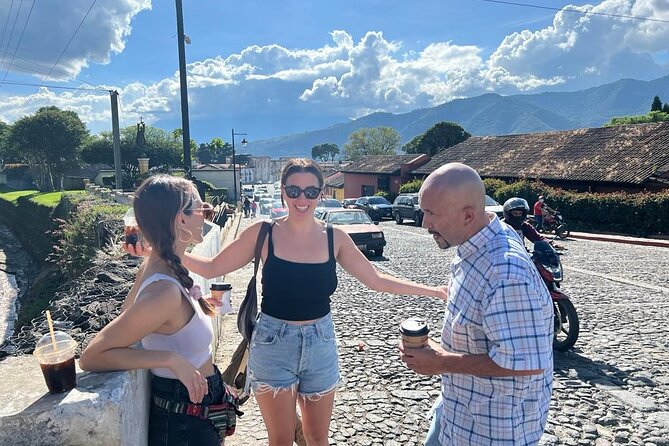
- Small group cap (max 15) keeps the experience personal.
- Guide leads the route so you do not have to problem-solve Antigua’s streets.
- Admission tickets are included for multiple historic stops.
- Santo Domingo area connection ties monastery past to today’s museum and hotel complex.
- Jade factory stop gives cultural context before you shop.
- Morning or afternoon departures make it easy to fit into your day.
Where the tour starts, and why that matters for your first day
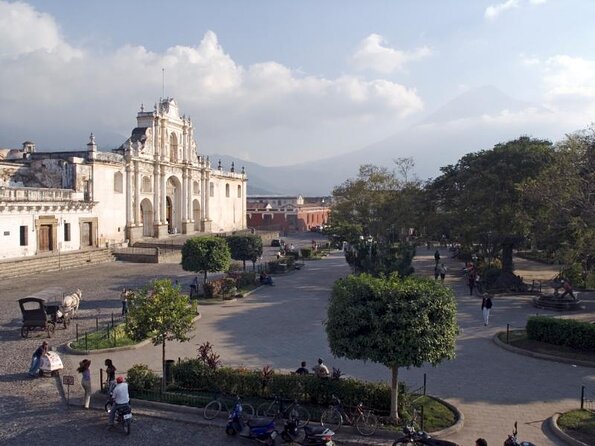
The tour meets at Café Condesa, La Casa del Conde on Avenida Norte 5a. This is a handy launch point because it puts you near Antigua’s core, where most of the famous landmarks are within walking distance. You end at the Casa Santo Domingo complex, around 3a Calle Oriente 28 A, which is still central enough to grab coffee or dinner afterward without a major shuffle across town.
Plan on a moderate walking effort. Antigua’s charm is its cobblestones, but they can feel uneven, especially if you are wearing thin-soled shoes. In real terms, this is a “walk and stop often” style tour, not a long sprint. The best way to make it enjoyable is to wear grippy shoes, bring water, and be ready to pause in shaded spots when your guide suggests it.
If you are doing Antigua for the first time, this kind of guided orientation can save you hours later. You will learn the geography, which streets matter, and what is worth revisiting. If you already know Antigua well, you will still get value from the added context your guide brings to the buildings you see every postcard.
More Walking Tours in Antigua
- Antigua Guatemala: City Highlights Guided Walking Tour
★ 5.0 · 462 reviews - Antigua Classic Cultural Walking City Tour – the best
★ 4.5 · 227 reviews - Antigua Walking Tour
★ 4.5 · 96 reviews
Iglesia de La Merced: the story behind one of Antigua’s major churches
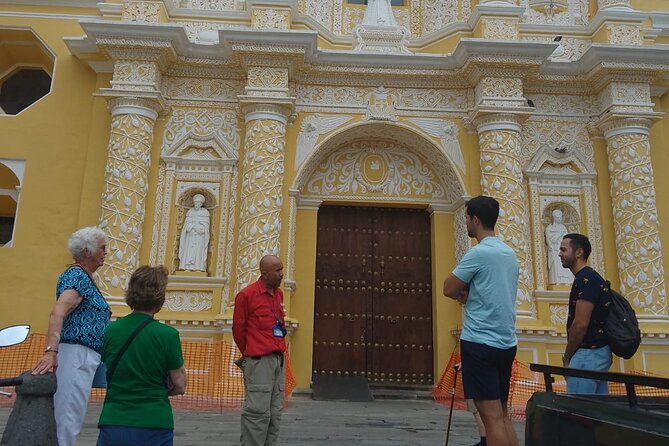
Your walk begins at Iglesia de La Merced. This is a good opening stop because it sets the stage: Antigua’s importance, and why religion shaped daily life in the colonial era. You do not just see a church façade and move on. You get a narrative that helps you understand what you are looking at, and why certain religious orders played such a big role in the city’s growth.
The “why” matters here. Antigua’s churches are not only pretty. They represent power, community life, and institutions that influenced education, culture, and even how the city recovered after major earthquakes. With this first stop, your guide lays down the framework so later sites do not feel like random monuments.
Time at the church is limited, so if you are hoping to take it at a slow pace, treat this stop as your orientation moment. You should be ready to look closely while your guide is explaining, then decide if you want to return on your own to explore farther at your leisure.
Arco de Santa Catalina: nuns, daily routines, and a famous arch
Next up is the Arco de Santa Catalina. This stop is short, but it is packed with meaning. You will hear about how the first order of nuns settled in the city and how the arch became part of their story. It is the kind of detail that makes a simple landmark feel personal, because you start connecting architecture to real human routines.
Even if you have seen the arch in photos, it is worth slowing down here. The arch is small in scale compared to the big cathedrals, yet it stands out because it was designed for practical movement and community life. Your guide’s explanation helps you read it like a piece of infrastructure, not just a background prop.
If you are a “walk fast and photograph” person, keep your expectations realistic. The stop is brief, so you will want to bring your best camera timing, not your longest shopping list.
Centro de Formacion de la Cooperacion Espanola: a convent restored for modern culture
Then you shift to a well-restored convent that has been turned into a cultural center. This is one of the places where Antigua’s layers become obvious. You are looking at colonial architecture, but you are also seeing how those structures can stay useful today.
The value of this stop is not just that the building looks good. You get context for how colonial-era spaces were repurposed and preserved. When you understand the “before and after,” you notice details you might otherwise miss, like how restoration changes the feel of the rooms and courtyards.
This is also a good moment to catch your breath. You get enough time to move through the space with your guide and still absorb what is in front of you. If your energy is fading from the walking, this kind of cultural stop with seated pauses tends to reset the pace.
A short list of other Antigua options
- Antigua Guatemala: Street Food Walking Tour with Tastings
★ 4.8 · 87 reviews - La Antigua Horror Stories Night Walking Tour
★ 4.9 · 74 reviews - Walking Tour of the Wonders of La Antigua Guatemala
★ 5.0 · 65 reviews - Walk Antigua Like a Local
★ 5.0 · 53 reviews
The printing press story and the book museum stop
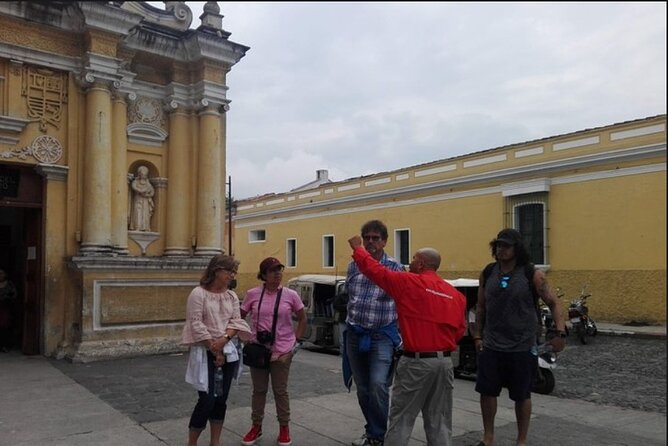
Mid-tour, you hear about the arrival of the first printing press and how that history became part of a museum experience. This is a smart pivot, because it moves the conversation beyond buildings into ideas and education. In a city known for churches and convents, the printing press angle shows you how knowledge spread in the colonial period.
Even if you are not a “museum person,” the printing press story can be a surprisingly memorable way to understand why Antigua mattered. It explains how texts, learning, and communication shaped society, not just faith.
This stop can feel more content-heavy, so keep an eye on your attention span. If your guide offers a lot of background, take quick notes for yourself. Later, when you read a sign or see an artifact, your notes will help you connect what you learned to what you see.
Palace of the Captain’s General and the military side of Antigua
Another key stop is tied to the Ayuntamiento (City Hall area) and the Palace of the Captain’s General. This is where the tour brings in the political and military layer of colonial life. The churches may explain faith, but the palace and its officials explain governance.
When you hear these stories while standing in the right spot, you start to see how Antigua functioned as an administrative center. It was not only a religious hub. It was a place where power was organized and decisions were made.
One practical note: if you want photographs, aim to take them while your guide is speaking early in the stop. Later, when people move inward or pause for explanations, angles can get trickier. This helps you capture both the façade and the context your guide is providing.
Catedral de San Jose ruins: how earthquakes shaped what you see
Your tour includes the Catedral de San Jose, and the key point is the ruins. You learn that strong earthquakes in the 18th century left major parts of the cathedral in ruins, which is why Antigua looks the way it does today.
This is a stop that many people love because it turns “damaged building” into a real lesson in resilience. Instead of treating the ruins as sad remnants, your guide frames them as part of Antigua’s identity. The city rebuilt, and the rebuilt city still carries the earthquake scars.
Time here can feel tight, especially if your guide gets into detailed explanations. If you prefer to move around and look from multiple angles, tell your guide you want some extra walking time within the area. A good guide will adapt the pace so you do not feel stuck in one spot the whole time.
Casa Santo Domingo: from monastery roots to museums and a hotel complex
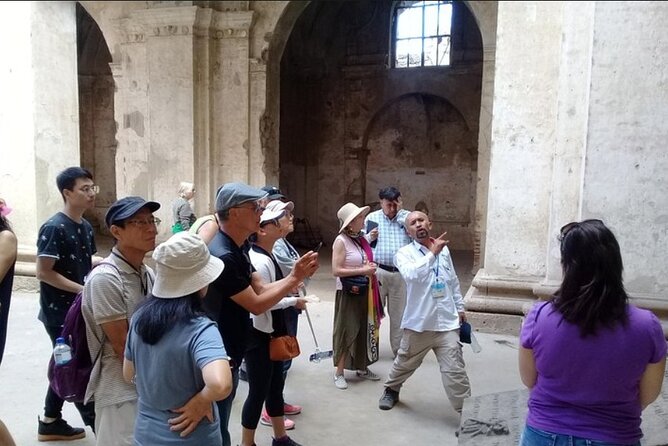
You finish with Casa Santo Domingo Museums, tied to the Dominicos and today’s museum and hotel complex. Santo Domingo started as a monastery, and now part of the site is shaped into a major cultural center with hospitality components.
This is a meaningful finale because it connects the tour’s theme back to everyday life. You see what was once religious space and how the complex functions now. If you like places where old and new coexist, this stop usually lands well.
The museum portion also gives you a chance to slow down. It is not just photo stops. You get guided context, and then you can decide how much time to spend exploring on your own within the Santo Domingo area.
If you want a clean next step after the tour, this is a strong ending point. You are dropped near a concentrated area of sights and services, so you can keep the day going with minimal planning.
Casa del Jade: Mayan jade culture, factory context, and smart shopping
A highlight for the tour is the stop at Casa del Jade, where you visit a factory, museum, and showroom focused on jade carvings. This is where the tour’s cultural promise becomes tangible, because you learn why jade mattered to the Mayas before you are shown finished pieces.
The practical question is what to do if you actually plan to buy. Here is my advice: treat this as a cultural stop first. Only then decide if you want to purchase. Jade can be expensive, and a showroom is also a sales environment. Go in knowing that the stories you hear are the value, not just the objects on the tables.
A few people have pointed out that the tour can lean commercial at the end of the walk. That is not unusual for cultural city tours, but it is worth keeping your control. Set a spending limit in your head. If you feel pressure to buy, step back and focus on what interests you, not what someone wants you to take home.
Also, because the stop includes tickets, you are not paying just to shop. But you should still expect to be shown products and given a chance to browse.
How the pacing really feels on Antigua cobblestones
This is listed as about three hours, and it usually plays out as a steady walk with multiple short pauses. That structure works well because Antigua sites often require you to slow down anyway, especially when you want to stand in the right place to understand what you are seeing.
Still, pacing can vary depending on the guide and the group. Some guides keep moving through the route with quick explanations. Others can spend longer on fewer buildings. Either way, you will want to manage your expectations: this is not a “hit 20 places in 2 hours” tour.
What I like is that you are not hiking up long distances all day. The route is centered on key historic areas, which makes it easier to keep going. And based on common feedback, many guides are attentive to comfort, like keeping you in shade when possible and building in time to sit.
Bring light layers. Antigua days can shift, and churches and interior stops may feel cooler than the bright streets outside.
Price and value: is $35 worth it?
At $35 per person for a roughly three-hour guided walk, the value comes from three places: context, time saved, and included entries. The tour does not just list landmarks. It explains why each site matters, and it does that while you are standing right there, which is the fastest way to make the city “stick” in your brain.
Admission tickets are included at multiple stops, so you are not paying separately to get into every highlighted building. You also get a licensed bilingual guide and, in some cases, guides who operate multi-lingual for the group.
The practical reality is that you are also paying for guidance through a city that is easy to get turned around in. If you tried to stitch these sights together on your own, you would spend extra time figuring out routes, entrance spots, and what to look for. This tour gives you that roadmap plus the talking points.
If you are someone who hates any shopping component, you should know the jade stop is built into the experience. So the “value” is not only about sights, it is also about learning before viewing objects. For most people, that mix works. For a few, the shopping pressure can feel like an unwanted shift near the end.
Guide factor: what to expect from people like Roberto, Antonio, Felix, and Geovanny
The biggest driver of satisfaction is the guide. Many people speak warmly about guides such as Roberto, Antonio, Felix, and Geovanny M. The common themes are energy, clear storytelling, and frequent recommendations for what to do next in Antigua.
You can use this as a tip for choosing your departure time. If you want the tour to feel lively, pick a time when you are fully awake and not rushing to be somewhere else. A high-energy guide does best when the group can match that pace.
Also, some feedback points to guides mixing languages, like Spanish and English within the same explanation. If you are an English-only speaker, it is reasonable to ask your guide at the start to slow down a bit or repeat key points in English. A good guide will handle it. If they do not, you will lose context fast, and the tour starts to feel like random stops.
Staying sharp at the meet point and keeping control of your day
At the start, be alert. One common issue in busy tourist areas is that someone may approach you like they are part of a tour before the official guide arrives. Your best defense is simple: wait for the guide who clearly represents the tour company and who connects to your booking group.
Once you are on the tour, keep control with small choices. If you get offered an extra paid experience during a stop, decide on the spot. Do not assume it is included. With a culture walk, unexpected add-ons can happen, and you will enjoy the tour more if you treat any extra purchase as optional.
Finally, if you care about every single planned stop, ask your guide early how the timing will work for that day. Antigua tours can change slightly based on access and pacing, and it is easier to adjust expectations up front than to feel disappointed later.
Should you book the Antigua Cultural Walking Tour?
Book it if you want a guided first look at Antigua, with real context for major churches, the earthquake story behind the ruins, and a thoughtful cultural stop at a jade workshop. It is also a good fit if you like a small-group pace and you want practical recommendations for what to do after the tour ends.
Skip it or adjust your plan if you are hunting for a low-key, self-directed wander. This tour is built around explanations and several structured stops, and it can include shopping-focused moments. If you hate retail pressure, set a spending limit in advance or plan to do museum and street time on your own after you get oriented.
My rule of thumb: take this early in your Antigua trip if you want to feel confident walking around afterward. Then use the rest of your time to chase your own favorites, now that you know what you are actually looking at.
FAQ
How long is the Antigua Cultural Walking Tour?
It runs for about 3 hours.
How much does the tour cost?
The price is $35.00 per person.
What is the group size?
The tour has a maximum of 15 travelers.
Where does the tour start?
The meeting point is Café Condesa, La Casa del Conde, Avenida Norte 5a, Antigua Guatemala.
Where does the tour end?
It ends at the Casa Santo Domingo area, including Centro cultural, Centro de convenciones y hotel Santo Domingo, at 3a Calle Oriente 28 A.
Are admission tickets included?
Yes. Admission tickets are included for the listed stops.
Is lunch included?
No. Lunch is not included.
Are tips included?
Tips are not included. You are recommended to tip based on your satisfaction.
Is the tour suitable for children?
Children pay half price when sharing with two paying adults, and children must be accompanied by an adult.
What is the cancellation policy?
You can cancel for free up to 24 hours in advance for a full refund. If you cancel less than 24 hours before, you will not be refunded.
Just reviewed around Antigua
- The old UNESCO★ 5.0 · 3 reviews
- Walking Tour Antigua, an open Museum★ 5.0 · 4 reviews
- Volcan Pacaya on wheels ATV From Antigua or Guatemala city.★ 5.0 · 4 reviews
- Transportation from Antigua to Panajachel★ 4.5 · 4 reviews
- Village Tour in Antigua Guatemala★ 5.0 · 4 reviews
- Tour of towns around Antigua Guatemala and Hobitenango★ 4.0 · 3 reviews
- Tour to the foothills of the volcano on ATV★ 5.0 · 3 reviews
- Private Transfers in Guatemala★ 3.5 · 3 reviews
Walking Tours in Antigua, compared.
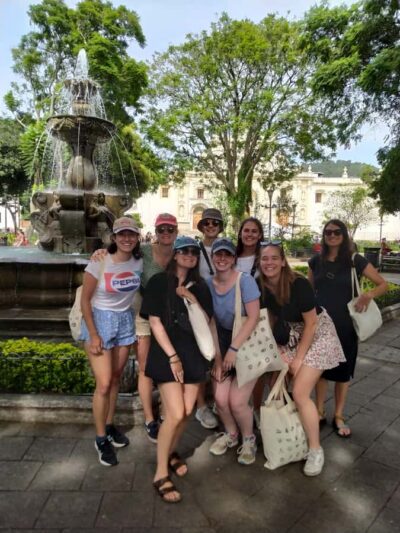
Antigua Guatemala: City Highlights Guided Walking Tour
Read our review →
Antigua Classic Cultural Walking City Tour – the best
Read our review →
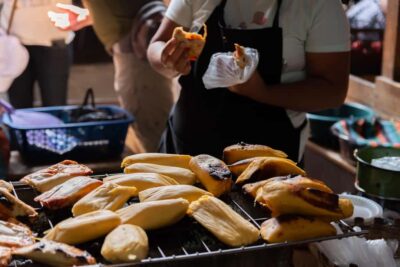
Antigua Guatemala: Street Food Walking Tour with Tastings
Read our review →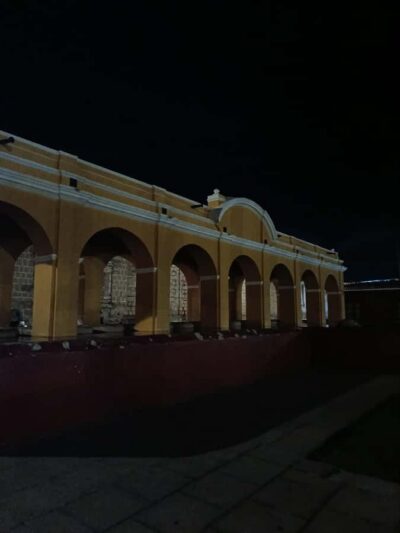
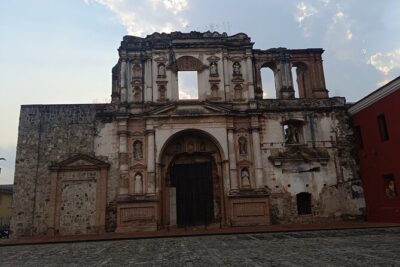
Walking Tour of the Wonders of La Antigua Guatemala
Read our review →
Browse the lists this tour appears in